Redcliffe Environmental Forum
  • News and Events
  • Plant of the Week
  • Special Features
  • About
  • Contact

Green Team and Gastropods in the Saltmarsh

4/30/2015

0 Comments

 
Picture
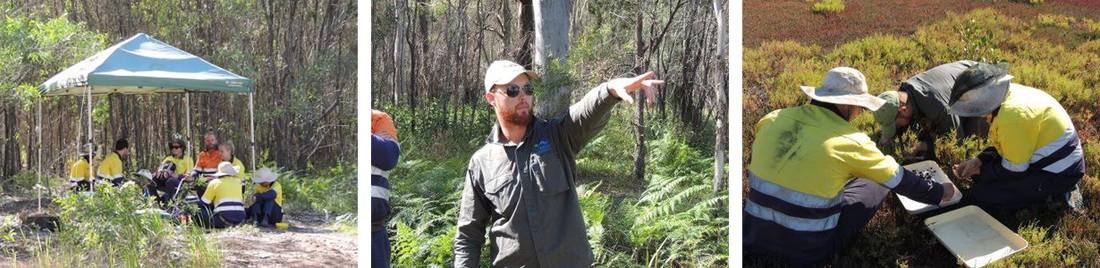
On Tuesday members of the Hays Inlet Green Army team, downed their weeding tools and paid a visit to the Bremner Road Saltmarsh Reserve. This site is the focus of a long term community science project on monitoring saltmarsh habitat. This type of habitat is listed as endangered in South East Queensland mainly due to the impact of urban and industrial development. This wetland habitat is also very sensitive to traffic mainly from recreational four wheel drive vehicles and motorbikes.

The site is now a reserve and since fencing has excluded the majority of vehicles the area is slowly recovering. The Green army team got stuck into helping with the vegetation monitoring with the guidance of scientist and saltmarsh expert, Jock Mackenzie (Mangrove Watch) and pictured in the centre of the image above along with Cheryl Bolzenius from WetlandCare Australia. Apart from monitoring the health and cover of saltmarsh vegetation the team also got involved with the gastropod snail monitoring program.

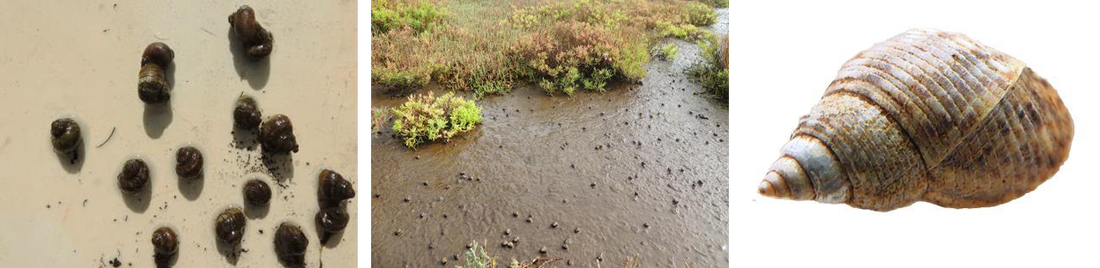
Tracking the abundance, location and health of gastropods is another way of monitoring the ecological health of the system. Scientists often use invertebrate species to track the health and recovery of habitats and in saltmarsh areas they have often used gastropods in monitoring programs.

So after a morning of setting up transects and grids for digital recording the Green Army team got on the ground (literally on their hands and knees) to mine for gastropods. They sampled the different saltmarsh vegetation areas for gastropods in order to identify and record their numbers so scientists can interpret the data and gain a better understanding of how the precious saltmarsh habitat is recovering.
Picture
If you would like to know more about saltmarsh habitat ecology and gastropods you can go to our site at http://saltmarsh.enviroed.com.au/Welcome.aspx
0 Comments

It’s time we all helped out our local koalas

4/21/2015

0 Comments

 
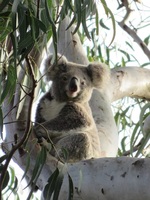
PictureClontarf resident; "Lily the Koala"
The destruction and degradation of koala habitat in our region means every piece of Eucalypt forest left needs to be looked after.  It’s time we all helped out; a small contribution from each of us can make a big difference to our koala population and wildlife in general This article outlines some of the issues our local koalas are facing and some positive actions that anyone in the community can provide assistance with. If you can spare a few hours here and there you can make a big difference to the health of our environment. 


A recent presentation from the Moreton Bay Rail Link Koala team (Endeavour Veterinary Ecology) summarised some of the impacts of this major infrastructure project on our local koala population. Over 400 koalas were identified over the past two years. Incredibly there was a significant mortality rate during the same period – nearly 200 deaths, many linked to attacks by wild dogs. There would be little doubt that the removal of significant tracks of koala habitat through development has exposed the marsupials to attacks on the ground.
This reduction in suitable habitat means koalas have to move between remnants of Eucalypt and are then vulnerable to attacks from dogs and exposed to the dangers of traffic.

Eucalypt forest not only provides shelter and food for koalas but provides habitat for many species of mammals, birds, reptiles and insects. They are a key to providing biodiversity, buffering our wetlands and giving local people the opportunity to see a koala in the wild.  Eucalypt grows in areas of the region which have limited exposure to floods. Unfortunately this type of land is suitable for development and consequently the majority of this habitat has been cleared.  
Functioning Eucalypt forest in our own Peninsula area including the catchment area of Moreton Bay has become a limited commodity.

There are still patches of Eucalypt around Hays Inlet but they are generally in poor health or fragmented so they are not capable of supporting large numbers of koalas. Fortunately, there is the potential to enhance the health and coverage of these “Koala-friendly” trees and provide more food and shelter for our threatened marsupials. This can be achieved in two ways:

·         Remove weeds which smother saplings and cause bushfires to burn at higher temperatures. The increased temperature kills native flora including Eucalypts, Melaleuca and Casuarina which opens up the soil to weed growth.

·         Propagate and plant koala friendly trees wherever the soil and topography is appropriate.  It is hard work and labour intensive but the rewards are worth it.

Recent work by our Green Army team at Clontarf has revealed what’s possible around Hays Inlet. Whilst it is important that the Council, State and Federal Government provide the resources necessary to rehabilitate our remaining natural habitat; it is also just as important that the community gets involved as well. Our government agencies alone cannot address the issue. We need volunteers for our local bushcare groups and conservation organisations to get stuck into the ground work of removing weeds, laying mulch, tree planting and looking after our environment in general. This type of direct action is needed to support initiatives like the Green Army Project at Hays Inlet. Improving the capacity of our regions remaining Eucalypt habitat in order to sustain koalas and wildlife should be a priority for members of the local community along with the support of government agencies including the Federal Green Army Program, the State Government and the Moreton Bay regional Council.

If you would like help or to know more about volunteering with the Redcliffe Environmental Forum – just click on the “contact” page on this blog.

0 Comments

Controlling Sedimentation 

4/9/2015

2 Comments

 
One of the contributors to the poor health rating of Hays Inlet (consistently the poorest water quality rating in the entire Moreton Bay area) is sedimentation. Some of this is no doubt due to the drainage system built mainly in the 60’s and 70’s. They are straight cut drains in tidal areas designed to quickly dispose of stormwater in the low lying areas of the Redcliffe peninsula. Unfortunately this means that any sediment loading from erosion is also displaced quickly into the bay.

Wherever we have development involving the clearing of on ground vegetation we immediately increase the exposure of the substrate to erosion. It is therefore important that wherever possible we mitigate the effects of erosion. One such method is a sediment control fence.

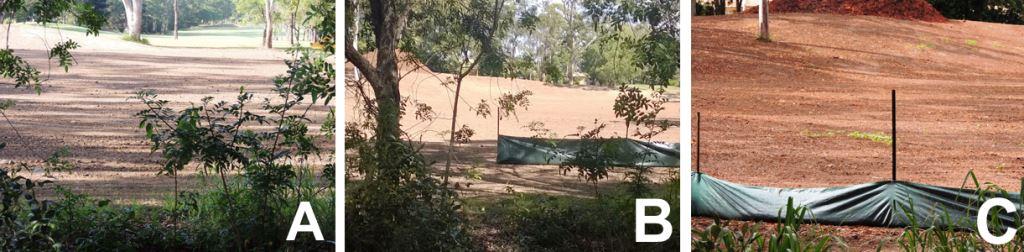
Adjacent to the Green Army site is the Redcliffe Golf Club who recently conducted some ground works including the clearing of vegetation in an area adjacent to a channel which flows directly into Hays Inlet. If you look at the first image (photo A) you can see that there is a lot of loose sediment which would be washed into the channel in the next rain event.  The club installed sediment control fencing in the “nick of time” (photo B). Just days later there was a significant rainfall event and if you look at photo C you can see how the sediment was trapped at the bottom of the fence. This sediment would have been washed directly into Hays Inlet if not for the fencing. Thus the fencing reduced the impact on topsoil loss and water quality. It’s not a perfect system, we still lose soil through erosion, but it does mitigate some of the effects of ground works.
Picture
Its important to control erosion and sedimentation, especially around wetland areas and waterways
2 Comments

    Author

    Bob Crudgington
    Redcliffe Environmental Forum Inc

    Picture

    Archives

    June 2021
    January 2021
    August 2020
    September 2019
    August 2019
    July 2019
    September 2018
    August 2018
    May 2018
    April 2018
    March 2018
    August 2017
    July 2017
    March 2017
    January 2017
    November 2016
    October 2016
    September 2016
    August 2016
    July 2016
    June 2016
    May 2016
    April 2016
    February 2016
    January 2016
    November 2015
    October 2015
    September 2015
    August 2015
    June 2015
    May 2015
    April 2015
    March 2015
    February 2015

    Categories

    All

    RSS Feed

Powered by Create your own unique website with customizable templates.